

Government Chancellor holds productive meeting with OECD Secretary-General and management
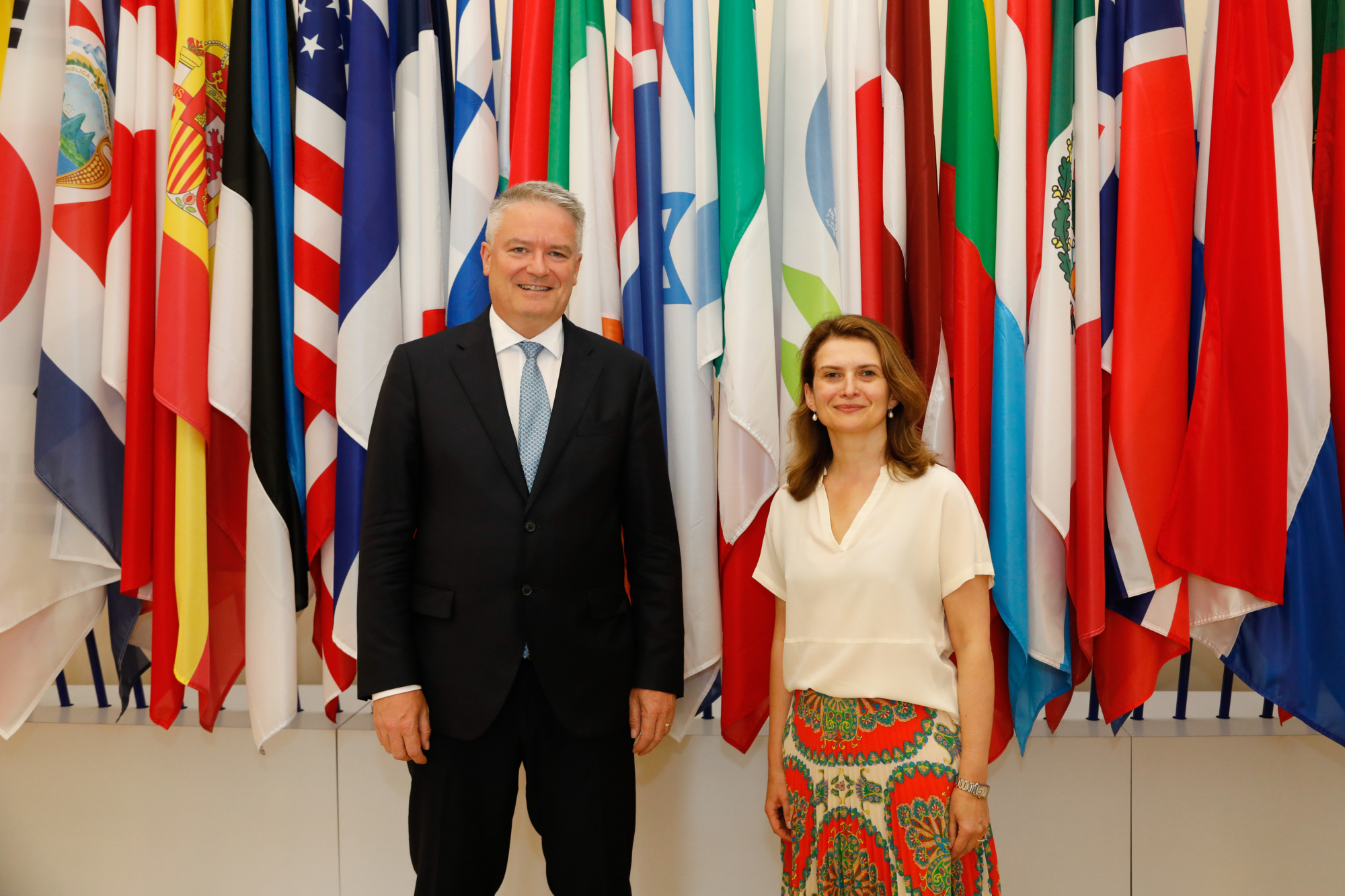
On Monday, the Chancellor of the Government, Giedrė Balčytytė, as part of her working visit to France, met with Secretary-General of the Organisation for Economic Co-operation and Development (OECD), Mathias Cormann, OECD Director of the Directorate for Public Governance, Elsa Pilichowski, OECD Director of Development Co-operation Directorate, Pilar Garrido González, OECD Deputy Secretary-General, Ulrik Knudsen, and Head of the Organisation’s Ukraine Division, Gabriela Miranda.
During the meeting with Secretary-General Cormann, the discussion centred around Lithuania’s active involvement in OECD activities over the five years of membership, also Lithuania’s exemplary leadership in combating disinformation, foreign interference, and driving development cooperation.
The Chancellor stressed the importance of strengthening the economic resilience of democracies and fight against disinformation, given that Russia is devoting significant resources to disinformation and trying to influence the internal life of democracies.
Lithuania is actively engaged in OECD initiatives on resilience to disinformation and remains commitment to contribute further in this crucial domain, said Chancellor Balčytytė.
The parties also discussed OECD’s ongoing efforts in Ukraine, where Lithuania played a pivotal role in initiating and supporting those endeavours, both ideologically and financially.
The Lithuanian delegation underscored the necessity of bolstering democracies’ capacity to act swiftly and with enhanced quality. Chancellor Balčytytė emphasized the vital importance of reliable integrated data for monitoring the situation and making quality decisions. In this regard, she presented the operational principles of the State Data Agency, showcased Lithuania’s achievements in data utilization, noting the challenges encountered in expanding data usage. It was agreed that Lithuania and the OECD would work together to pool experience and knowledge to ultimately shape them into valuable OECD knowledge products.