

Lithuania Helps Moldova to Develop a System to Combat Hybrid and Cyber Threats
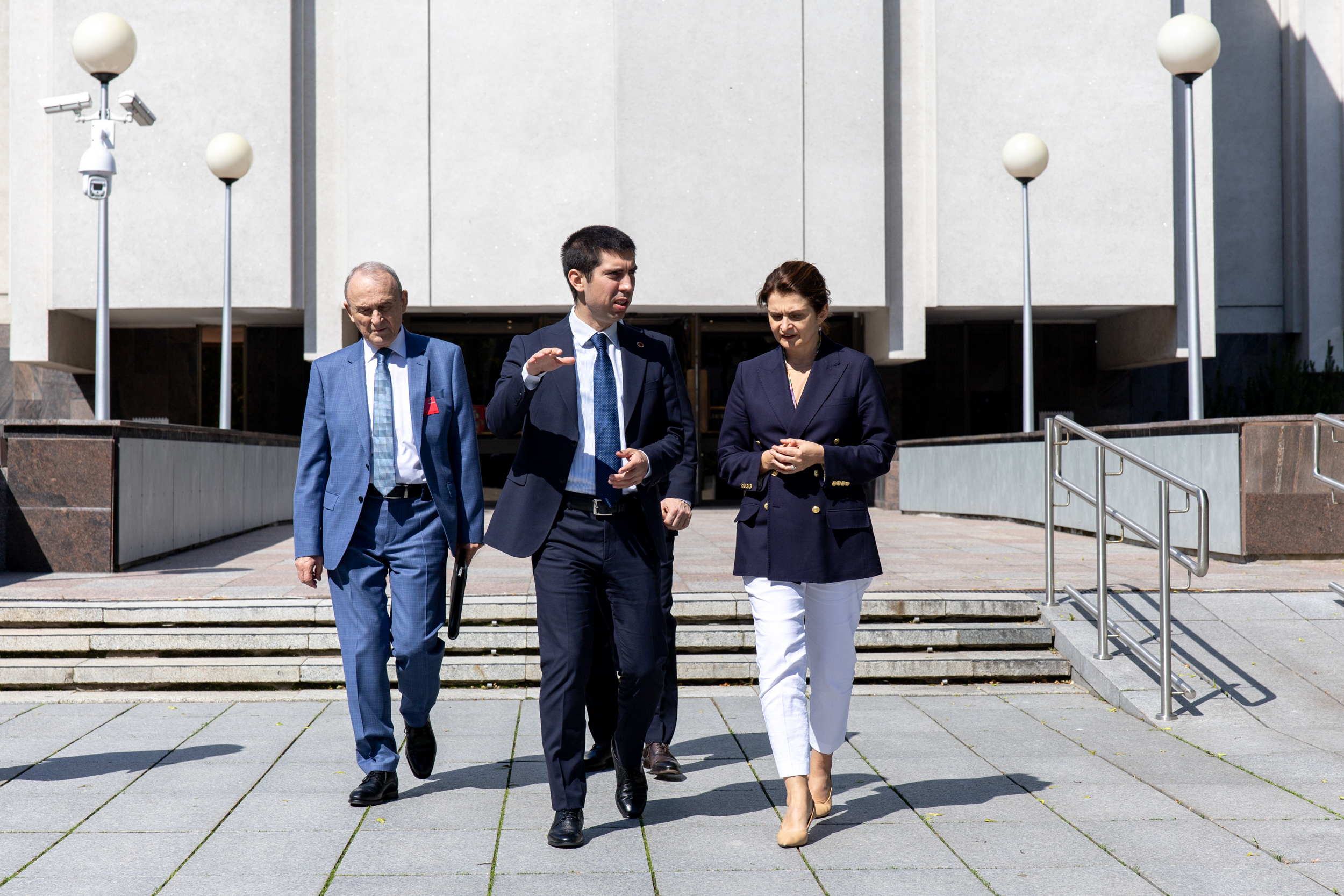
The Chancellor of the Government, Giedrė Balčytytė, met with the Deputy Prime Minister of the Republic of Moldova, Minister of Foreign Affairs Mihai Popșoi. The meeting focused on the process of establishing the Moldovan Centre for Strategic Communication and Countering Disinformation, which is supported by Lithuania, the opportunities for bilateral cooperation, and Moldova's integration into the European Union (EU).
"We must act in a coordinated way to constantly and clearly show the aggressor that we understand Russia's full intentions to deceive, that we understand propaganda, and that we are able to distinguish between disinformation and real facts. Lithuania firmly supports Moldova in fighting Russia's hybrid war and supports Moldova on its path towards Euro-integration", said Balčytytė.
The Chancellor confirmed that Lithuania will continue to support Moldova's efforts to combat hybrid and cyber threats emanating from Russia and from within the country. She assured the Moldovan Deputy Prime Minister that the support project initiated by the National Crisis Management Centre (NCMC) of The Office of the Government of the Republic of Lithuania and organised in cooperation with the disinformation analysis centre Debunk.org is progressing smoothly: the technological equipment and best practices for the development of a technologically advanced inter-institutional system for the analysis of information incidents and response will be transferred to Moldova soon.
The meeting focused on the need to remain vigilant in the run-up to the elections and the referendum in Moldova - events in which Russia will do everything possible to derail the plans for Euro-integration and weaken the Moldovan state. The challenges of disseminating factual information to all segments of Moldovan society and choosing the right channels of dissemination were discussed, as well as the fight against disinformation and Russia's attempts to use the democratic process to undermine democracy.
During their visit, the members of the Popșoi delegation also visited the National Crisis Management Centre, where they were briefed on the functioning of the Centre. Vilmantas Vitkauskas, Head of the NCCC, stressed the importance of smooth inter-institutional, public-private cooperation and rapid decision-making in order to prevent disinformation in a timely manner, and shared NCMC's experience with the system, which will soon be used by Moldova.
Lithuania and the Organisation for Economic Co-operation and Development (OECD) have set up a training centre to build democratic resilience and combat disinformation. The Centre provides training to representatives of the OECD and partner countries to strengthen their capacity to identify, mitigate, prevent and combat illicit foreign influences and disinformation. One of these trainings will take place in Vilnius from 11-13 June and will bring together participants from different regions of the world: Europe, Africa, Latin America and the Caribbean, South-East and Central Asia. Representatives from Moldova have also been invited to attend the training.