

Baltic Prime Ministers at Riga Summit: focus on regional security and strategic infrastructure
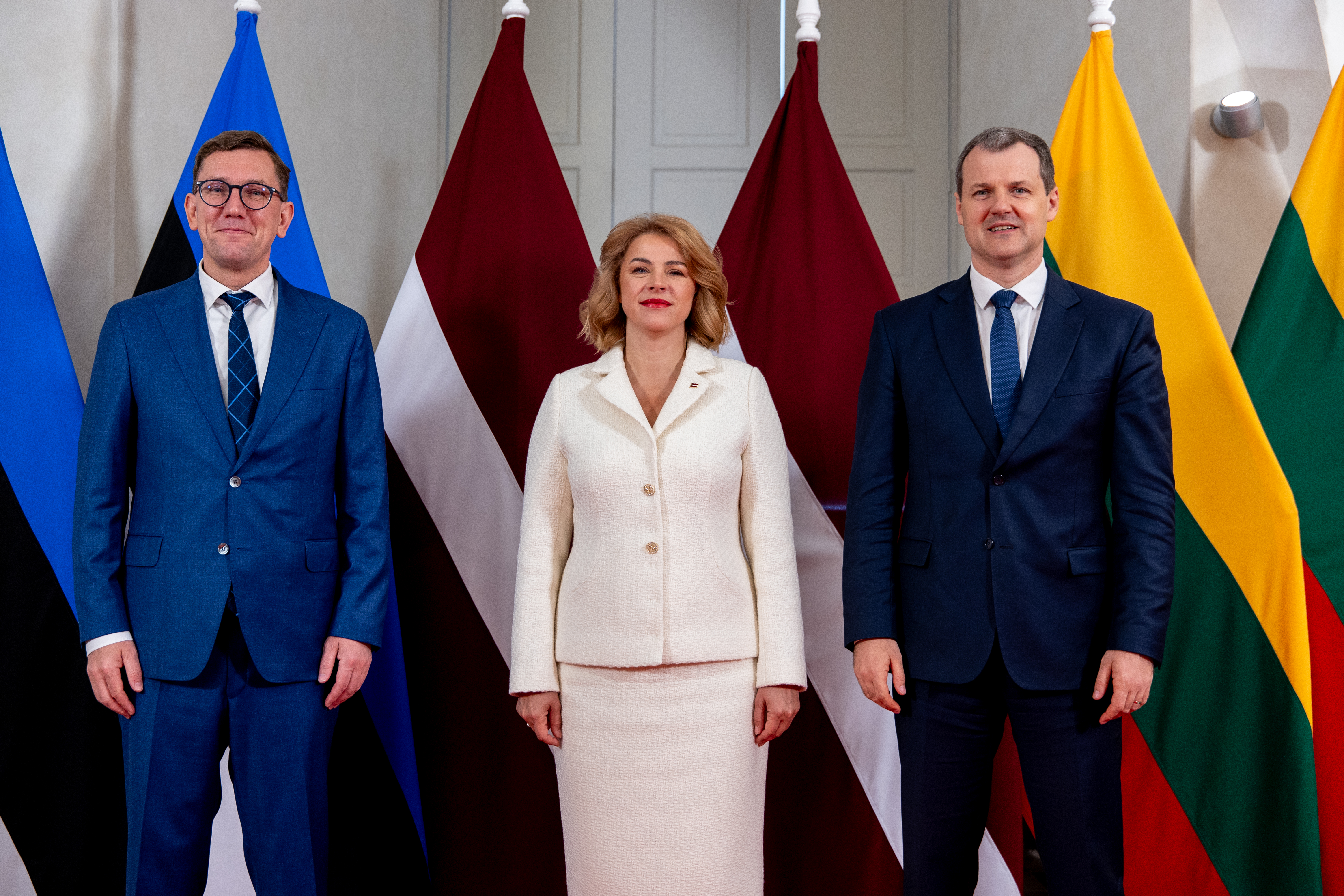
At today’s meeting of the Baltic Council of Ministers in Riga, Lithuanian Prime Minister Gintautas Paluckas joined his Latvian and Estonian counterparts, Evika Siliņa and Kristen Michal for high-level working sessions on regional security, defence, and the development of strategic infrastructure.
The three leaders pointed out an urgent need to bolster Europe’s defence capabilities and maintain a strong NATO presence in the Baltic Sea region, particularly in light of the threats posed by the so-called "shadow fleet." They also discussed ways to increase support for Ukraine, including the rapid opening of accession chapters in its EU membership negotiations. Further emphasis was placed on sustaining pressure on Russia and its accomplice Belarus through tougher sanctions, and on ensuring accountability for war crimes—including the full confiscation of frozen Russian assets.
‘Europe’s security begins here, in our region,’ said Prime Minister Paluckas following the meeting. ‘We must not only maintain NATO’s strong presence in the Baltic States but also play an active role in strengthening European defence capabilities, supporting Ukraine, and deepening the transatlantic partnership. Today we send a clear message: we are united, prepared to face threats, and committed to enhancing our collective security.’
The Baltic leaders also gave significant attention to border security, reviewing measures to strengthen national frontiers and coordinate joint efforts under the Baltic Defence Line initiative, in cooperation with Poland’s Eastern Shield project.
Strategic projects in energy, transport, and critical infrastructure were also high on the agenda. Special focus was given to completing Rail Baltica by 2030, expanding electricity interconnections, and fostering regional collaboration in renewable energy development.
‘Strategic initiatives like Rail Baltica and the Harmony Link—a planned offshore electricity connection with Germany—form the backbone of our region’s economic and energy security,’ noted Prime Minister Paluckas. ‘The Baltic States must be ambitious and demonstrate the political will to work together and pursue these shared goals in a coordinated way.’
The summit also addressed the need to enhance the protection of critical infrastructure, secure adequate funding, and continue advancing the Northern-Baltic Hydrogen Corrido —a key project aimed at reducing reliance on fossil fuels and accelerating the transition to green energy.
