

Chancellor of the Government discusses Lithuania’s contribution to the UN’s efforts in the fight against Russian sexual crimes in Ukraine
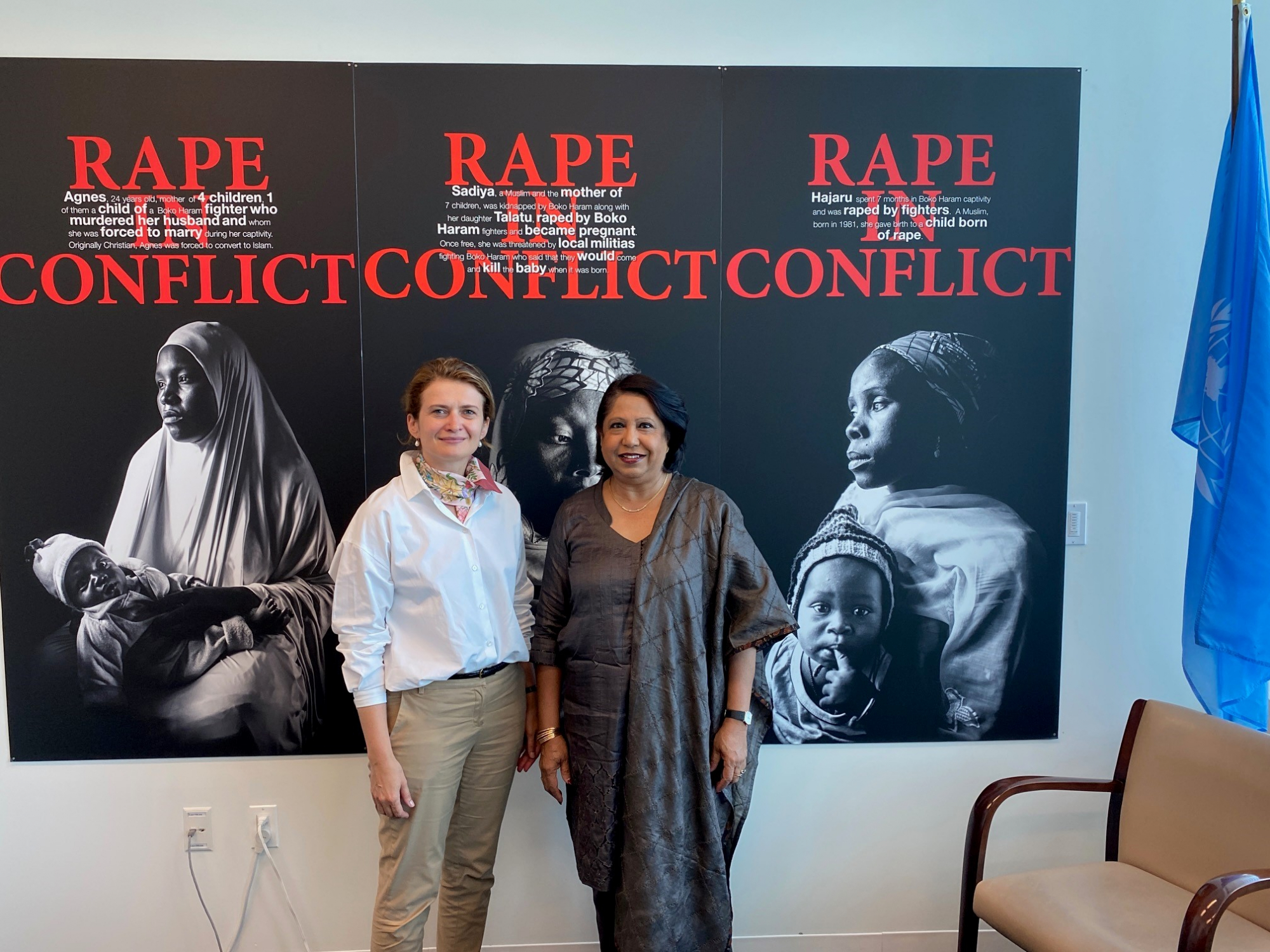
On July 17, Chancellor of the Government Giedrė Balčytytė, who is on a working visit to the United States, met with the United Nations (UN) Special Representative of the Secretary-General (SG) on Sexual Violence in Conflict, Pramila Patten. The parties mostly focused on the UN’s efforts to address Russia’s sexual violence in Ukraine, the assistance provided to victims, and Lithuania’s contribution to these UN efforts.
“Russia uses sexual violence as a weapon against women, children, and the elderly. This seems to be a deliberate Russian war tactic. The contribution of the United Nations in combating these Russian crimes and in helping the Ukrainian victims is invaluable,” said the Chancellor of the Government.
Ms. Balčytytė noted that Lithuania is making efforts both at the national level and through international formats, as well as financially contributing to the activities of the Office of the Special Representative of the UN Secretary-General, to prevent sexual violence in Ukraine and to bring the perpetrators to justice.
In January 2023, Lithuania contributed EUR 50,000 to the UN Action Against Sexual Violence in Conflict, chaired by Pramila Patten. This year, Lithuania plans to contribute a further EUR 30,000 to its activities. Ms. Balčytytė emphasized that Lithuania also provides assistance to refugees from Ukraine who have suffered sexual violence during the war and are currently living in Lithuania.
Last week, Ms. Patten, the UN Special Representative of the SG on Sexual Violence in Conflict, presented the UNSG’s 2022 annual report on conflict-related sexual violence: 2,455 cases of sexual violence were recorded in 2022, with 94% of the victim being women and girls. Since the start of Russia’s full-scale war against Ukraine, the UN has recorded and confirmed 125 cases of sexual violence.
“Unfortunately, we believe that the cases of Russian sexual violence in Ukraine that are officially recorded by the UN and currently under investigation are just the tip of the iceberg, and that there is much more of this type of violence. Therefore, the most important thing now is to mobilise the greatest possible efforts of the international community to prevent such crimes, help the victims, and ensure justice,” said Ms. Balčytytė.
The Chancellor also noted that Russia’s efforts to simplify the adoption and deportation process of Ukrainian children without parents are deeply concerning. Ms. Balčytyte noted that Ukrainian children are also being trafficked to Belarus in cooperation with the Lukashenko regime.
“It is very important to find ways to effectively collect reliable data on the deportation of children, as the number of deported children may be even higher than currently known. We need to maintain pressure on the aggressor countries,” stressed the Chancellor at the meeting.