

Chancellor of the Government meets Google representatives to focus on data-driven governance and combating disinformation
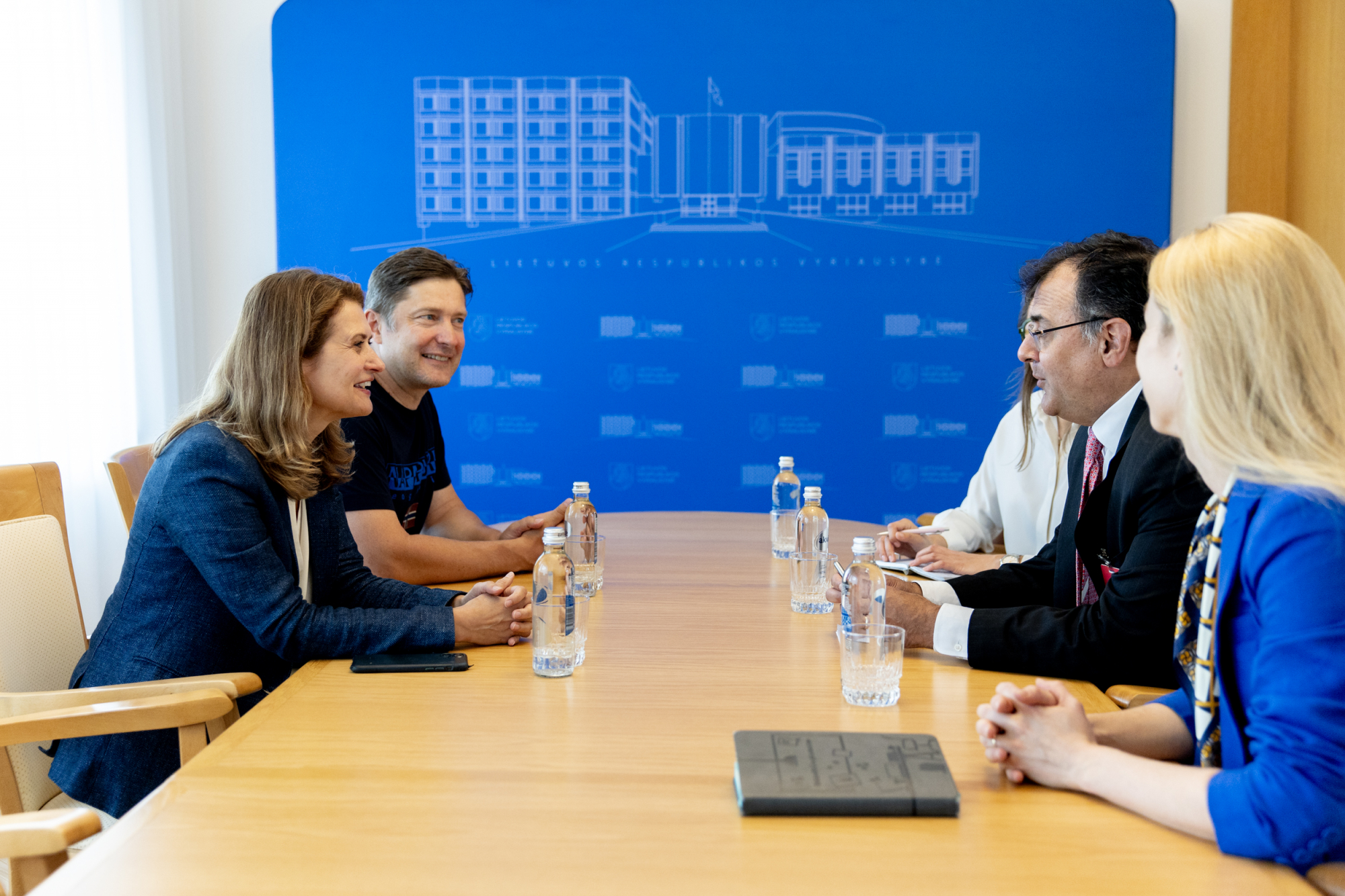
On Monday, the Chancellor of the Government, Giedrė Balčytytė, and the Advisor on Digital Transformation, Open Data, Public Procurement, Rimantas Žylius, met with Google’s Global Head of Government Affairs & Public Policy, Karan Bhatia, and representatives of the company. The meeting focused on strengthening the fight against disinformation on online platforms and cooperation opportunities in the field of data-driven governance.
“Russia’s war against Ukraine is accompanied by Russia’s war against democracies, in which disinformation and propaganda are perhaps the aggressor’s main weapon. As Russia seeks to disrupt the rules-based world order and encroaches on the fundamental principles of free societies, we cannot apply the criteria of freedom of expression to lies and equate the aggressor with the one who defends his country,” said Chancellor of the Government Ms Balčytytė, noting the importance of online platforms such as Google and social networks when it comes to dissemination of information, expression of opinion and civic engagement.
During the meeting, the parties highlighted the problem of artificially promoted content through trolls and the exploitation of algorithms, which makes the identification of misinformation and responsible content moderation even more important. This is in the interest not only of democratic societies but also of the companies whose platforms are manipulated, the Chancellor stressed.
During the meeting, Google representatives presented the company’s activities in response to the Russian invasion of Ukraine and the spread of related disinformation.
Ms Balčytytė presented Lithuania’s actions to combat systematic cases of disinformation activities that clearly show signs of acting against the state, including the ongoing discussions with major technology companies and the European Commission since last year, as well as the draft amendments to the Law on the Provision of Information to the Public and the Criminal Code, which were registered in the Seimas this spring.
The need to broaden the dialogue between governments and the major platforms to deeply discuss and understand the changes brought about by the development of these technologies was discussed.
The parties discussed data-driven governance and the developments in this direction in Lithuania, highlighting the benefits of real-time data in recent reforms and challenges such as the COVID-19 pandemic and irregular migration.
The parties also discussed the opportunities for cooperation between Lithuania and Google in developing institutional capacities for data-driven governance.