

Government Chancellor and EC’s Head of Directorate for Communication focus on EU resilience and fight against disinformation
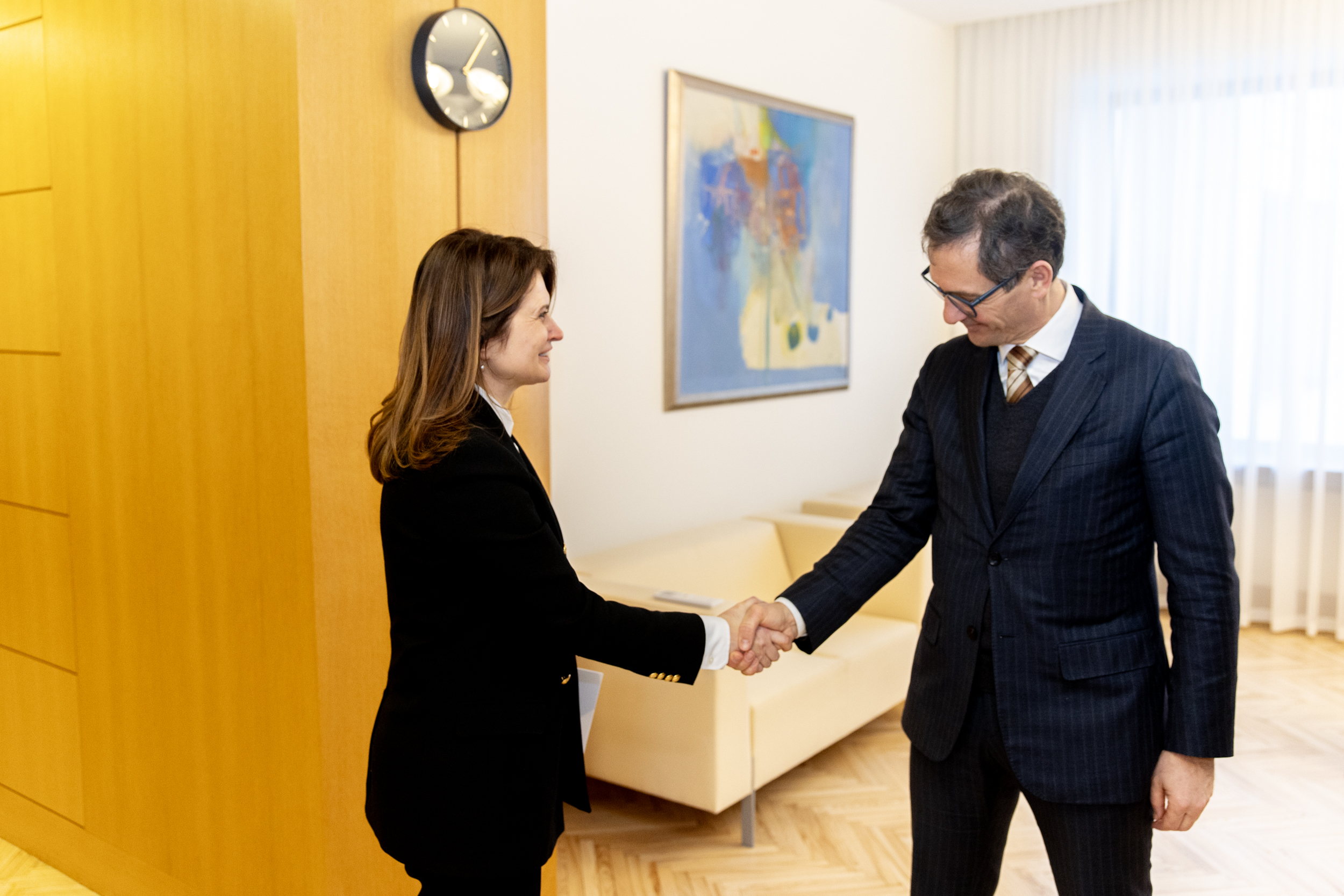
Democratic nations find themselves unwittingly embroiled in Russia’s ongoing information warfare, but they still remain underequipped to defend themselves effectively, said Government Chancellor Giedrė Balčytytė in her meeting with EU Commission Director for Representation and Communication, Richard Kühnel. The Chancellor shared Lithuania's experience in combating disinformation and emphasized the need for collaborative efforts to counter these threats as well as to enhance resilience at the EU level.
Giedrė Balčytytė pointed out that authoritarian regimes, adept at employing disinformation tactics domestically, are increasingly targeting democratic societies with audacity. With numerous elections scheduled in the EU and Western states this year, Russia is likely to actively exploit them. Its tactics aim to distort truth, flood the information space with lies, and sow doubt to undermine confidence in democratic institutions and unity within Europe. Successful combatting of disinformation is only possible when institutions, non-governmental and private sectors cooperate, and civil society is vigilant and capable of recognizing hostile actions. We, as democracies, must do more together and cooperate to enhance our resilience, said Government Chancellor Balčytytė.
Lithuania has stepped up its efforts to counter hostile disinformation, including through the establishment of the National Crisis Management Centre, intended to monitor threats and prevent crises. The country shares its expertise with partners like Moldova and is closely involved OECD initiatives on countering disinformation. It is contributing to building better resilience through its expertise and training initiatives.
The parties noted the challenge posed by disinformation on social media and the imperative to address emerging threats facilitated by the AI. As emphasized by the Chancellor, social media platforms frequently fall short in adequately moderating content to curb the dissemination of disinformation, especially amid Russia's conflict with Ukraine.
The Lithuanian Government has brought up this concern in talks with leaders of social media platforms. However, it's worth noting that the procedures and regulations of these platforms are ineffective in addressing the issue. A significant challenge lies in the spread and artificial amplification of false information through fake accounts.
As Giedrė Balčytytė emphasized, it’s crucial to clearly recognize the evident pattern that the digital trail of most falsehoods leads back to Russian-origin accounts and individuals. This issue isn't minor or isolated—it affects every democratic Western nation. Hence, it's paramount to exchange insights and collaborate to fortify societies and institutions against such threats. This is particularly imperative given the observed trend of authoritarian regimes sharing and replicating disinformation tactics.
The parties also noted the importance of promoting turnout for this year's European Parliament elections, and they recalled Lithuania's 20th anniversary of EU membership. According to the Chancellor of the Government, the motto of this anniversary, ‘20 years of success’, well reflects Lithuania’s approach towards the Community. The Chancellor highlighted the positive impact of EU membership on country’s development.
The need for data-driven governance, enabling a finer identification of issues and solutions, monitoring progress, and offering a clearer articulation of decision rationale and implications to the public, was also among the items discussed.