

Lithuania and OECD launch a unique international programme to counter disinformation
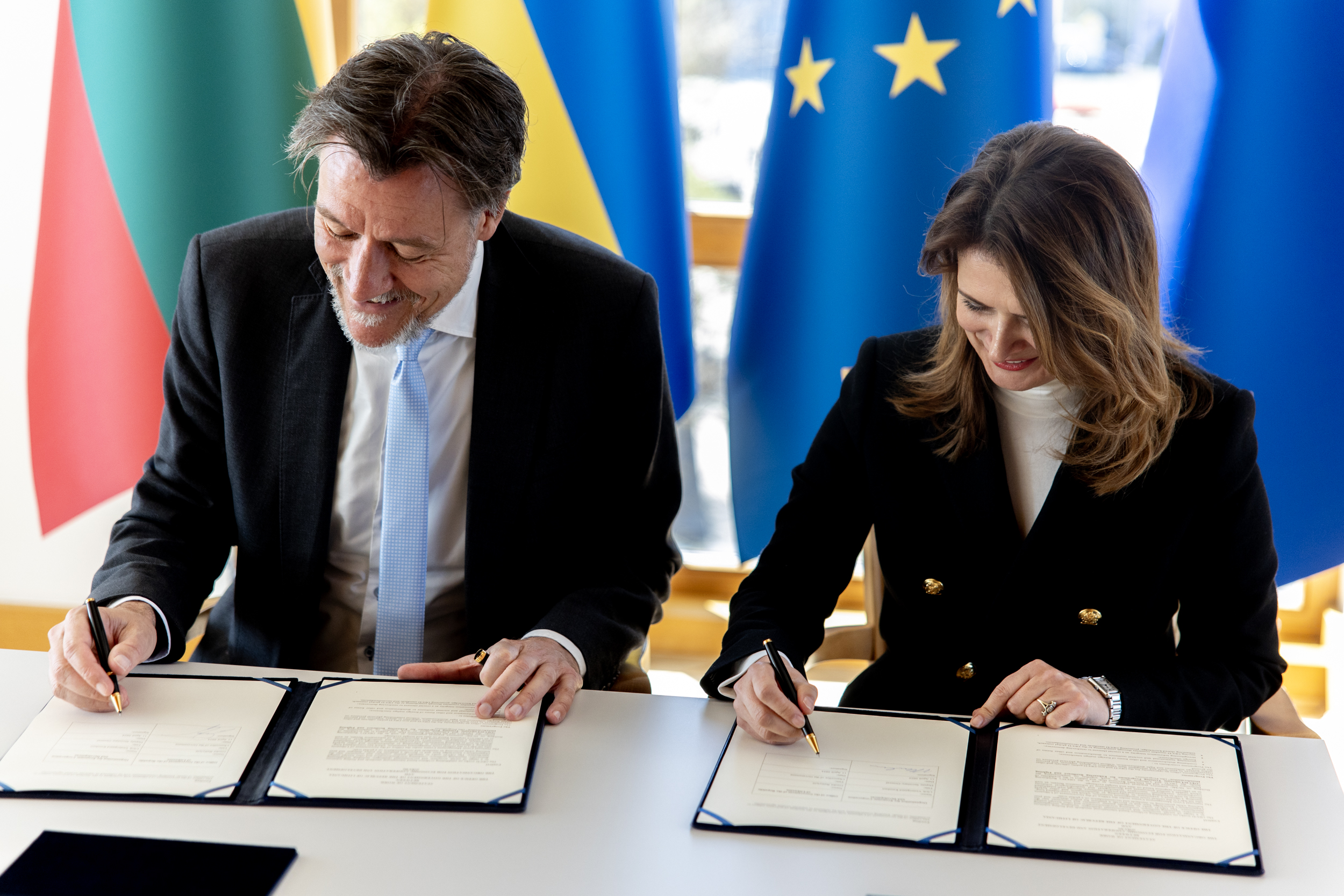
In cooperation with the Organisation for Economic Co-operation and Development (OECD), partner governments and representatives of various sectors, Lithuania will exchange knowledge and experience on pinpointing disinformation and selecting the most effective methods and tools to counter its spreading. The Chancellor of the Government, Giedrė Balčytytė, and the Deputy Secretary-General of the OECD, Ulrik Vestergaard Knudsen, signed an Agreement on cooperation in the implementation of the OECD-Lithuania training programme for building resilience and combating disinformation.
‘Drawing upon Lithuania’s extensive experience and ongoing efforts in managing such threats, we are actively enhancing our understanding of the threat landscape, and bolstering the resilience of democratic states. By collaborating with the OECD and tapping into the insights of fellow nations, we aim to enhance the capabilities of all programme participants. Lithuania remains steadfast in its commitment to combatting disinformation within the OECD and other collaborative frameworks,’ said Government Chancellor Giedrė Balčytytė.
‘Lithuania’s continued support will enhance our mutual efforts to tackle some of the most pressing issues of our time and help increase institutional and societal resilience to disinformation and other forms of foreign interference. This initiative of Lithuania’s is a timely, important, and constructive contribution. Lithuania is a key partner for the OECD on this topic, and I thank Lithuania for its steadfast support in building capacity and sharing expertise with OECD members and partner countries,’ said Ulrik Vestergaard Knudsen.
The programme will be implemented through a virtual centre of excellence administered by Lithuania, where experts from the OECD and other countries in Europe, Asia, Latin America and Africa will receive training and seminars on protecting against interference in democratic processes by aggressor countries and to share best practices in the field of countering disinformation.
Following the signing of the Agreement, the National Crisis Management Centre, an executor on the Lithuanian side, will ensure the administration of the activities, mobilise expertise, and organise trainings and seminars. For its part, the OECD will identify potential areas for training, offer the opportunity for experts from the OECD and non-member countries to improve their knowledge and competences within the framework of the programme, summarise the lessons learned in the training programme, and follow up on these lessons in a timely manner.
Lithuania is an active member of the OECD. One of the focal points of our country’s engagement with this organization is knowledge-sharing aimed at building resilience and combating disinformation. On 4 March this year, the OECD presented an overview of best practices and proposed a framework to assist in shaping political responses in the realms of bolstering information integrity and building resilience against disinformation. This document was crafted by the OECD Expert Group on Government Responses to Disinformation, where Lithuania is a co-founder.