

Lithuania Takes Strict Action Against Smuggling by Unmanned Means from Belarus
Following last night’s incident, when a large group of contraband meteorological balloons was launched from Belarus into Lithuanian territory, the National Security Commission (NSC) was convened on the instruction of Prime Minister Inga Ruginienė. During the meeting, threats and risks to civil aviation safety and the protection of the state border were assessed, and decisions were taken on further measures to curb smuggling activities by air.
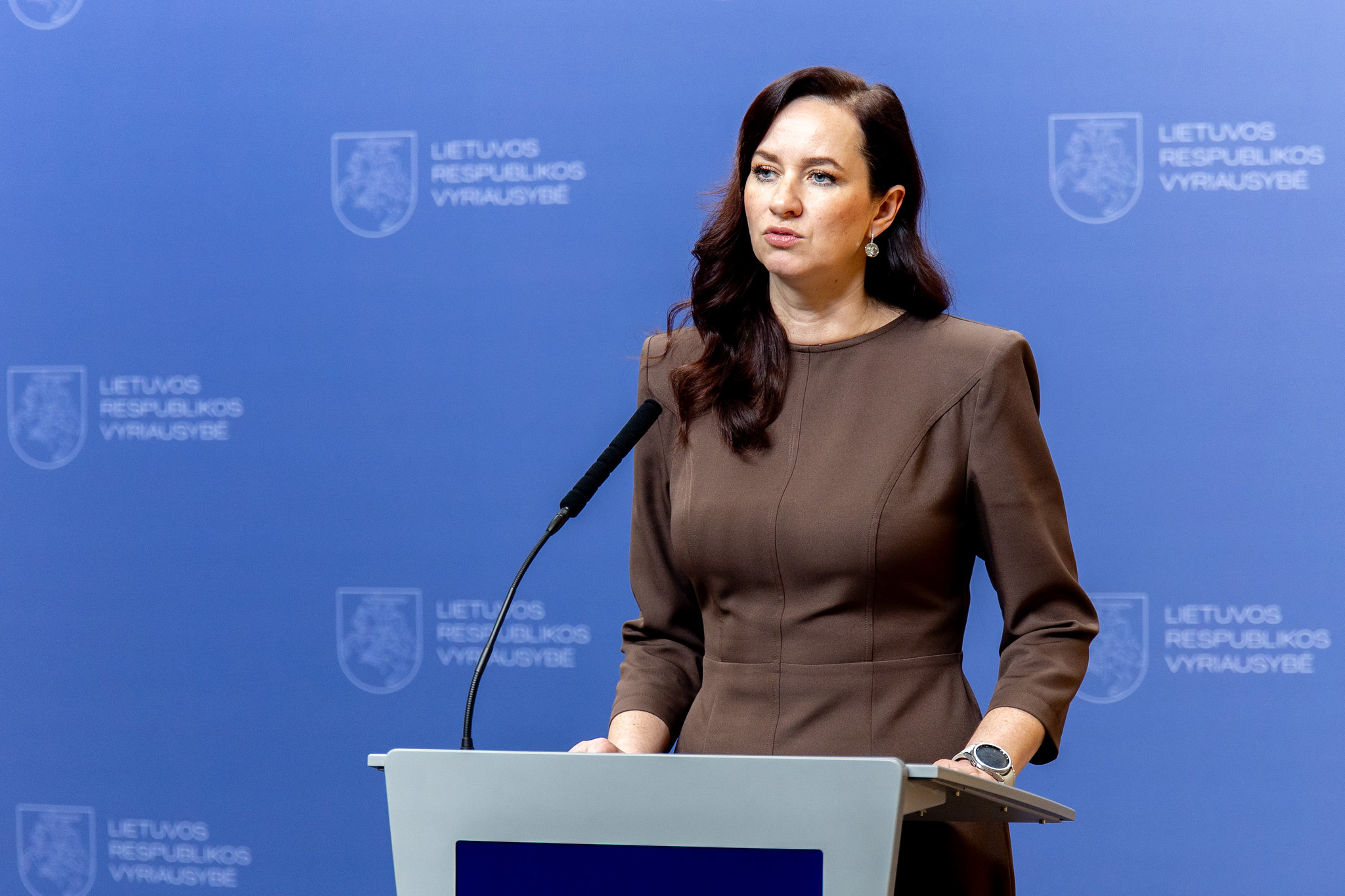
“Lithuania will respond firmly to any violation of its airspace: if similar incidents recur, the border with Belarus will be closed. Aerial smuggling poses risks to security and civil aviation; therefore, institutions will act in a coordinated manner to ensure that this criminal activity is effectively prevented and made economically unviable,” said Prime Minister Inga Ruginienė. She noted that the NSC will meet again next week to review progress made in response to this incident.
In view of repeated incidents involving balloons used for smuggling, the National Security Commission decided that, in the event of a similar occurrence, the State Border Guard Service (SBGS) may independently decide to close border control points with Belarus for 24 hours. If the threat persists, the SBGS will submit a proposal to the Government to extend the closure.
It was also noted that criminal liability for smuggling by air should be tightened. It was decided to initiate amendments to the Criminal Code so that the transportation of contraband goods by balloons or other unmanned means would carry stricter penalties. The amendments would also introduce the possibility of applying civil recovery measures to compensate for damages caused by the suspension of airport operations or other disruptions.
The meeting also discussed technological solutions for blocking SIM cards attached to contraband shipments. The Ministry of the Interior (MoI) was tasked with providing information and proposals on technological tools that would allow SIM cards used in smugglers’ tracking devices to be blocked from identifying the landing sites of balloons.
It was further decided to explore technologies capable of neutralising the balloons. The MoI will prepare the necessary technical specifications and submit them to the Ministry of the Economy and Innovation, which will seek high-tech companies capable of developing solutions for balloon detection, tracking, and neutralisation. The aim is to make smuggling activities economically unprofitable and unattractive to smugglers.
In addition, the Ministry of Foreign Affairs was instructed to warn Belarus that failure to take action against smugglers launching balloons or drones from its territory may lead Lithuania to consider a longer-term closure of border control points. Lithuania emphasises that such activity poses a direct threat to civil aviation and public safety.
___
Late in the evening of 21 October, the Lithuanian Armed Forces recorded several hundred signals that could have been contraband meteorological balloons flying from Belarusian territory into Lithuania. Due to the threat they posed, airspace over Vilnius was temporarily closed and flights suspended to ensure civil aviation safety.
Flights resumed at 6:30 a.m. on Wednesday morning. Around 30 flights were affected by the incident, with more than 4,000 passengers impacted.
As a preventive measure, traffic through the Šalčininkai and Medininkai border control points was temporarily restricted, with their operations resuming at 9:00 a.m.
Criminal intelligence actions are currently under way to determine the scale of the operation, its organisers, and the means used.
This year, more than 100 individuals have been detained for aerial smuggling, 20 of whom have already been convicted. Some operations were organised using meteorological balloons equipped with GPS transmitters and SIM cards, allowing the location of the dropped cargo to be identified.
Lithuanian authorities maintain constant contact with border institutions in Poland and Latvia, where similar incidents have also been recorded.