

Matas Drukteinis: Čiurlionis "points a finger" at Lithuania's limitless potential
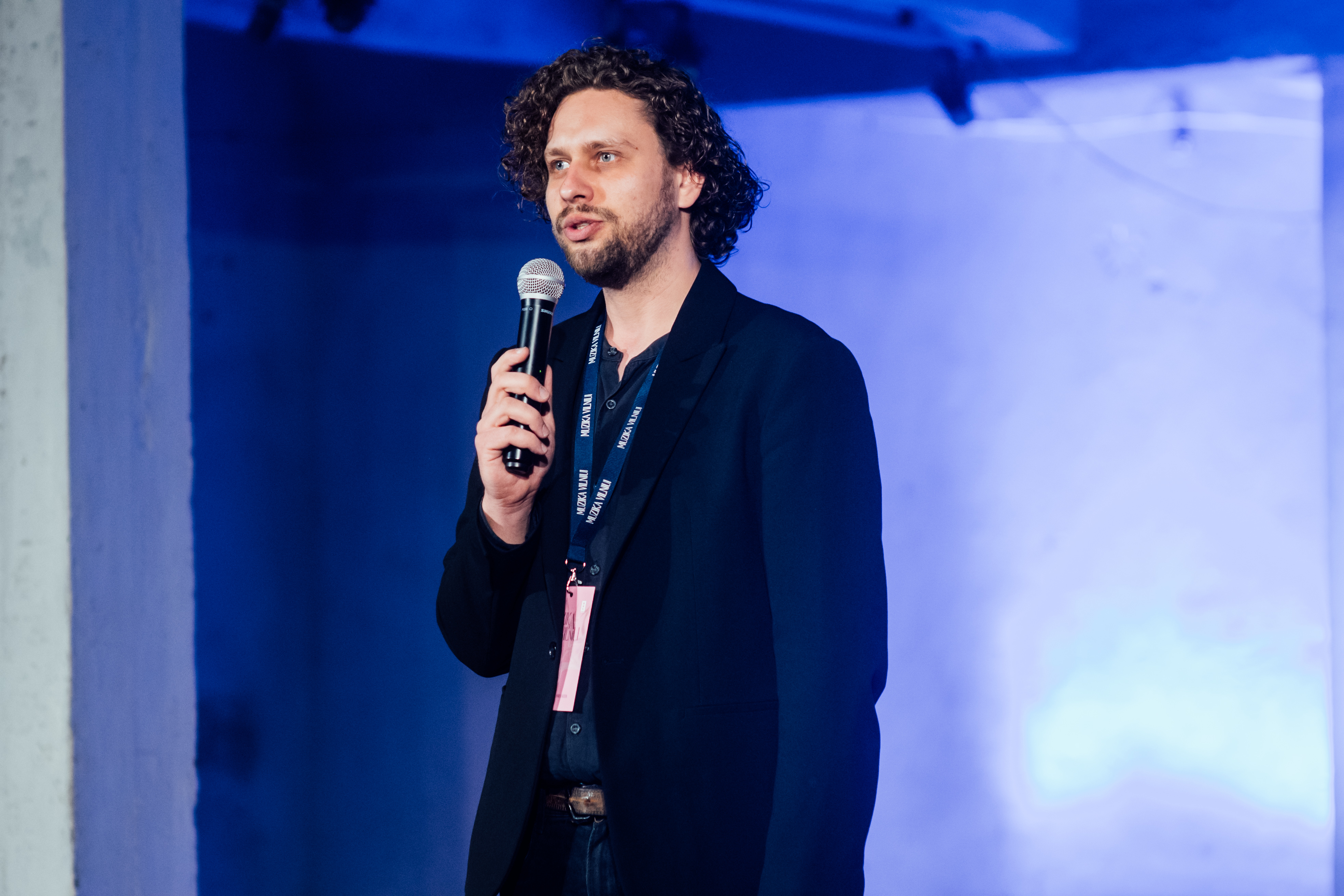
In 2025, we are celebrating the 150th anniversary of Mikalojus Konstantinas Čiurlionis, a milestone recognised by UNESCO. The anniversary programme, curated by the Office of the Government, features concerts, exhibitions, and various events dedicated to the artist’s work, taking place in more than 10 Lithuanian cities as well as in Poland, Germany, France, Japan, and other countries. These events are organised by dozens of collaborating organisations. How does one manage a programme of this scale? Why is Čiurlionis important to Lithuania, the world, and each of us individually? We talk about all this with Matas Drukteinis, Adviser to the Prime Minister on cultural affairs.
It seems that this year, Čiurlionis is resonating and visible everywhere: his music is played in the largest concert halls, artists are improvising on Čiurlionesque themes, and in schools or even kindergartens, people are talking about Čiurlionis through poetry and other creative forms. How was this programme put together, and what goals or changes are you aiming to achieve through its implementation?
Imagine: the programme is being shaped by over 100 co-creators — ministries, municipalities, cultural organisations, embassies — not to mention the number of artists and other cultural figures contributing to the creation of works, artistic programmes, or events. This collaboration and the emerging initiatives, even from the smallest communities, to celebrate Čiurlionis’ birthday in their own way is already a tremendous achievement.
Through this programme, we seek not only to encourage a deeper understanding of Čiurlionis and his work but also to awaken the Lithuanian people's belief in their own creative potential and to show the international community that we have been and continue to be an inseparable part of Western artistic processes.
The concept of the programme unites all the essential human and national values that Čiurlionis contemplated — values that, if nurtured, could strengthen our spiritual backbone. At the heart of it all are the images of light and infinity.
The programme invites people to immerse themselves in Čiurlionis’ space and time — not only in his artistic work but also in the historical contexts of Lithuania, offering a better understanding of that era and our past. This dimension is intertwined with the present — our time. The programme also features new works inspired by Čiurlionis, contemporary art processes influenced by his creativity and philosophy, and the themes explored in today's contexts invite us to unlock contemporary topics that feel personally relevant.
In your view, who is Čiurlionis to the modern Lithuanian? What is his meaning and importance for our collective identity?
An interesting detail reflects the influence of personalities like Čiurlionis on collective identity. Surveys show that almost all Lithuanians know who Čiurlionis is, yet only about 42% are familiar with his work. This suggests that the fundamental historical figures of our nation and culture are, for many of us, more like names and images from textbooks rather than consciously formative phenomena.
Nevertheless, we cannot say that such personalities and their activities have not contributed to shaping Lithuania's identity. On the contrary: they have contributed significantly — but we either do not understand this, meaning we probably do not know how, or we do not appreciate it. In both cases, it is problematic because we lose an important element of self-awareness and the understanding of the society to which we belong. As in therapy or life, we identify past events and our actions to understand our present state, decisions, and behaviours, and to adjust them. We build the future by understanding the past, our history. This does not mean that we must remain stuck in it, but rather use that knowledge creatively. Creativity is always tied to the future because it establishes history for future generations. These anniversary celebrations of Čiurlionis clearly show: we are living in the time that Čiurlionis helped to establish.
Understanding this also reveals an intriguing aspect of collective identity — it is something we continuously shape, and it can change. Therefore, it is especially important to connect the entire timeline into a coherent process. The Čiurlionis anniversary year invites us to reflect on fundamental questions about our nation: who we are, what has shaped us, who we want to become, and what we are doing to achieve that.
Čiurlionis, so to speak, "points a finger," revealing the limitless potential of Lithuania and our nation. This potential stems primarily from the distinctiveness of our cultural identity: a country between East and West, speaking one of the world's most ancient languages, while at the same time creating innovations throughout history and actively participating in the most current developments across many fields. From the birth of opera at the Palace of the Grand Dukes, almost simultaneously with its emergence in Italy, to interbellum aviation led by the ANBO aircraft, and today's biomedical discoveries — these are just a few examples showing that we have always kept pace with the latest currents of civilisation.
How does Čiurlionis contribute to a deeper understanding of ourselves? Can it be said that by experiencing Čiurlionis’ art, we become... better people?
In my view, Čiurlionis embodies ideas that are particularly important today — those of light and infinity. Why? Čiurlionis understood light as creativity, knowledge, focus, or higher spiritual aspirations. Meanwhile, infinity is a clear reference to the eternal nature of exploration and discovery: humanity’s ongoing need to seek answers to important questions, the awareness of how many questions remain unanswered, and, at the same time, the limitless potential of individuals and humanity as a whole. We see this potential — and we can direct it either toward destructive or positive actions. This brings us back to light — it is something we must nurture and cultivate within each of us.
Essentially, we are talking about a very simple yet almost alchemical formula for how to grow better people and a better society. Čiurlionis left this to us indirectly — through his symbol-filled art, the ideas expressed in his letters, and the example of his life. All that remains is for us to believe in it, internalise it, and practise it.
As an organiser, closely interacting with the cultural community that is intensely celebrating Čiurlionis this year, how do you see the audience's relationship with him? Are people managing to establish a personal connection, to hear what his work is telling us? What emotions accompany this — are we longing for Čiurlionis, have we somewhat forgotten him, or perhaps are we now discovering him in an entirely new light?
Only a small part of the events planned for this year has taken place so far. However, examples such as the performance at the National Philharmonic of the original version of the symphonic poem The Sea („Jūra“) — just as Čiurlionis wrote it, without later corrections — or the opportunity to see Čiurlionis exhibited at the M. K. Čiurlionis National Museum of Art alongside some of the brightest painters of his era in Europe, as well as the unique virtual reality experience The Creation of Worlds („Pasaulių sutvėrimas“), have shown that audiences have been astonished. I have often heard remarks that delighted us enormously, like: "I discovered a different Čiurlionis" or "He feels so close to me now."
In fact, even from the organisers and creators themselves, those who interpret Čiurlionis in their works, I hear that delving into his personality has brought them new insights — about the artist, about their own creative journeys, and about our cultural development and heritage. These experiences are priceless and often eventually transform into impressive and impactful artistic outcomes.
Many artists secretly dream not only of inspiring their audience but also of inspiring other artists. So I have no doubt that what is happening at this year’s programme events would bring Čiurlionis immense joy (smiles).
How can each of us celebrate Čiurlionis this year? What should we definitely do, see, not miss, and take part in so that we can confidently say — I celebrated Čiurlionis’ anniversary?
First and foremost, in celebrating this anniversary year, we encourage everyone to experience Čiurlionis’ authentic work. To see his visual art, it is essential to visit the M. K. Čiurlionis National Museum of Art in Kaunas and explore the international exhibition currently on display there, From Amber to the Stars: M. K. Čiurlionis, His Contemporaries and Kindred Spirits („Nuo gintarų iki žvaigždžių: M. K. Čiurlionis, amžininkai ir bendraminčiai“). At the same time, do not miss the opportunity to visit his house-museum in Druskininkai and the M. K. Čiurlionis House in Vilnius — these are places where you can truly "touch" the authenticity of Čiurlionis’ daily life.
Throughout the year, a variety of concerts will also take place, many of them free of charge. I invite you to attend not just one or two, but as many as possible, to hear a wide range of Čiurlionis’ musical compositions and gain a broader understanding of what kind of composer he was and what music he left for us. In the autumn, I particularly recommend not missing the events of the festival World Piano Stars Greet M. K. Čiurlionis („Pasaulio fortepijono žvaigždės sveikina M. K. Čiurlionį“) and experiencing top-level musicians performing his work.
Besides experiencing the authentic Čiurlionis, there will be intriguing contemporary interpretations and artworks inspired by him. Be sure to visit such events as well, to see the lasting influence this artist has had up to the present day, and how his creativity connects with current processes and technologies.
One of the most striking examples of this is likely to be the imaginary Čiurlionis opera Jūratė, currently being created by Arvydas Malcys and the Operomanija team, using artificial intelligence tools. Through these modern innovations, M. K. Čiurlionis’ dream — based on his wife Sofija’s libretto — to create the first Lithuanian opera will be realised.
And these are just a few recommendations out of the many fascinating events happening this year: there will be even more works, events, and opportunities showing that Čiurlionis and his creativity offer limitless possibilities for experiences and discoveries.
And, perhaps, the program, covering all of Lithuania, encourages travel?
Yes, in celebrating the anniversary year, we invite people to travel as much as possible. Not only to attend events organized in different cities, but also to follow Čiurlionis' path through those Lithuanian places where he visited, created, and where you can find interesting memorials and stories about him.
One might ask: "Why is this necessary?" One of Čiurlionis’ greatest sources of inspiration was the nature surrounding him and its imagery. Therefore, by traveling in Čiurlionis' footsteps, we not only get a better understanding of his biography and his world, but also discover or revisit Lithuania's natural gems and cities and towns that preserve rich and unique histories.
Seven cities associated with Čiurlionis are highlighted: Vilnius, Kaunas, Varėna, Druskininkai, Plungė, Rietavas, and Palanga. In some places, you can learn about Čiurlionis' family and childhood history, in others, you will follow the traces of his love with Sofija, or get to know his social activities. All these cities and locations tell different stories about the artist and will allow you to explore his life more deeply, while also discovering Lithuania.